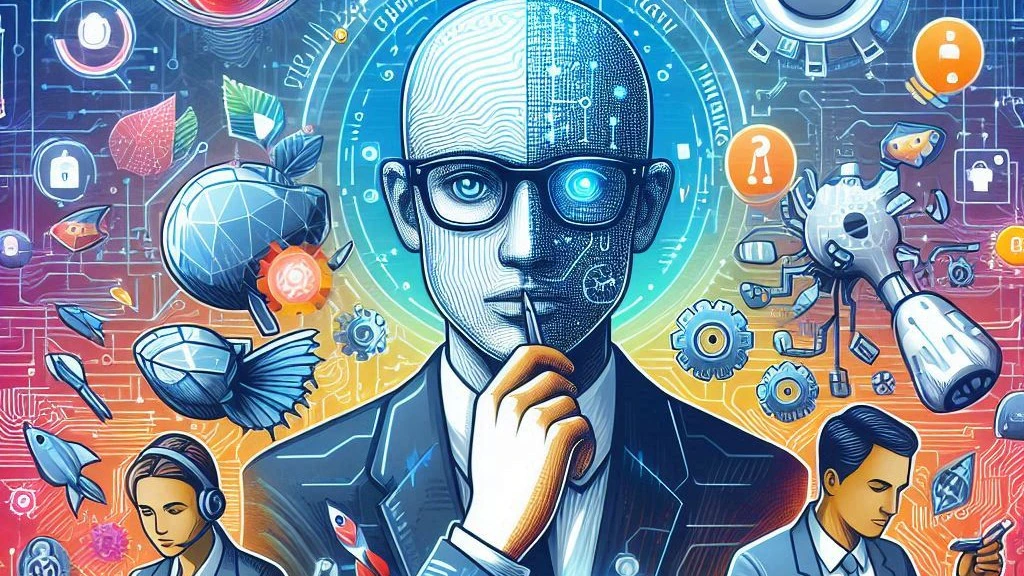
If you walk into a classroom today, you might still see what you’d expect — a teacher at the front, students half-listening, half-distracted, notebooks open, minds wandering. But somewhere just beneath that familiar surface, something is shifting.
Learning is no longer tied to a single place or a single person.
Students are watching explainer videos at midnight, asking questions to chat-based tutors, revisiting lessons at their own pace. And slowly, almost quietly, the idea of what a “teacher” looks like is expanding.
The Rise of Always-Available Learning
One of the most noticeable changes in recent years is accessibility.
AI tutors don’t sleep. They don’t get tired, and they don’t mind repeating the same concept ten different ways until it clicks. For students who hesitate to ask questions in class — and let’s be honest, that’s a lot of them — this creates a safe, pressure-free space to learn.
Related analysis: Between Screens and Pages: How We Actually Learn Best Today
You can pause, rewind, try again. No judgment.
That alone has made a big difference.
What AI Tutors Actually Do Well
AI systems are particularly strong when it comes to personalization.
They track how a student learns — where they struggle, where they breeze through — and adjust accordingly. If someone is weak in algebra but strong in geometry, the system notices. It adapts.
This kind of tailored attention is hard to achieve in a traditional classroom, especially when one teacher is managing 30 or 40 students at once.
Related analysis: Degrees, Skills, and the In-Between: How Learning Is Quietly Changing in India
And then there’s speed. Instant feedback. Instant explanations. No waiting for the next class or the next doubt session.
AI Tutors vs Human Teachers: Future classroom kaisa hoga
It’s a question that feels both exciting and slightly unsettling.
On one hand, AI tutors are clearly powerful tools. They make learning more flexible, more accessible, and in many cases, more efficient. For students in remote areas or those without access to quality education, this can be transformative.
But education isn’t just about information.
A teacher does more than explain concepts. They read the room. They notice when a student is unusually quiet. They pick up on confusion that isn’t spoken out loud. They motivate, guide, sometimes even mentor in ways that go beyond textbooks.
AI, at least for now, doesn’t quite reach that level of emotional understanding.
The Human Side of Teaching
Think back to your own school days.
Chances are, the teachers you remember weren’t just the ones who explained things well. They were the ones who made you feel seen. Who encouraged you when you doubted yourself. Who maybe, just once, changed the way you looked at something.
That kind of connection is hard to replicate.
Human teachers bring empathy, intuition, and a kind of unpredictability that makes learning feel alive. They can adjust not just the lesson, but the energy of a room.
And sometimes, that matters more than the content itself.
Where AI Falls Short (For Now)
Despite its strengths, AI still has limitations.
It can analyze patterns, but it doesn’t truly understand context the way humans do. It might explain a concept perfectly, but miss the emotional barrier that’s stopping a student from engaging.
There’s also the risk of over-reliance. If students lean too heavily on AI for answers, they might skip the deeper thinking process that real learning requires.
And then there’s the digital divide. Not every student has equal access to technology, which can widen existing gaps rather than close them.
A Hybrid Classroom Is Already Taking Shape
Instead of thinking in terms of replacement, it might be more useful to think in terms of collaboration.
Imagine a classroom where AI handles repetitive tasks — practice exercises, instant feedback, progress tracking — while the teacher focuses on discussion, critical thinking, and emotional support.
The teacher becomes more of a facilitator, a guide, a mentor.
The AI becomes an assistant — efficient, tireless, and always ready.
This combination has the potential to create a more balanced, more effective learning environment.
What This Means for Students
For students, the future classroom could feel very different.
Learning might become more self-paced. More interactive. Less about memorizing and more about understanding. There could be more room for curiosity, more space to explore individual interests.
But it also means students will need to develop new skills — like self-discipline, digital literacy, and the ability to think critically about the information they receive.
Because with more tools comes more responsibility.
Teachers Aren’t Going Anywhere
There’s a common fear that AI will replace teachers entirely.
That seems unlikely.
What’s more realistic is a shift in roles. Teachers may spend less time delivering lectures and more time engaging with students on a deeper level. Less focus on “what to learn,” more focus on “how to think.”
And honestly, that’s a shift many educators have been hoping for.
A Classroom That Feels More Human, Not Less
It might sound ironic, but the rise of AI in education could actually make classrooms more human.
By taking over routine tasks, AI frees up time for real interaction — conversations, debates, moments of insight that can’t be programmed.
In that sense, technology isn’t replacing the human element. It’s making space for it.
The Road Ahead
We’re still in the early stages of this transition.
There will be trial and error. Some things will work beautifully, others won’t. But the direction is clear — education is becoming more flexible, more personalized, and more connected to the real world.
The future classroom won’t be defined by AI or humans alone.
It will be shaped by how well they work together.
And if we get that balance right, learning might just become what it was always meant to be — not a system to pass through, but a journey to grow within.