Water is one of those things we use all day without really thinking about it. You wake up, fill the kettle, brush your teeth, make coffee, run the dishwasher, take a shower, and probably refill your glass several times along the way. It’s just there.
Until it isn’t quite right.
Maybe the water has a noticeable chlorine smell. Perhaps your glasses look cloudy, or there’s sediment collecting in a faucet aerator. Some homeowners simply don’t enjoy the taste of their tap water and find themselves hauling home bottles week after week.
That’s often the moment when people start looking into Water Filtration Systems.
The problem is that the phrase itself covers a huge range of options. There are whole-home systems, under-sink filters, countertop units, specialized media filters, reverse osmosis setups, and plenty of products with impressive labels that don’t always make the decision any easier.
Related analysis: Finding the Right Place for a Drinking Water System in Your Home
The best place to start isn’t with the fanciest product. It’s with the water you already have.
Every Water Problem Has Its Own Story
It’s tempting to assume that all filtration systems do the same thing. Put water in, cleaner water comes out. Simple.
In reality, different technologies are designed to address different concerns. A system that works well for one issue may not be the best answer for another.
For example, a homeowner dealing with visible particles may have very different needs from someone who is mainly concerned about taste or odor. Another household may want treatment for the entire home, while a family that is satisfied with its shower and laundry water may only want better water at the kitchen sink.
That’s why testing or evaluating water before choosing equipment can be so helpful.
Related analysis: The Everyday Benefits of Better Water: Protecting Your Home and Making Life Easier
It replaces guesswork with actual information. Instead of asking, “What’s the best filter?” you can ask a much better question: “What am I trying to improve?”
That small shift can save money, time, and a lot of frustration.
When Sediment and Chlorine Become Everyday Annoyances
Some water issues are easy to notice. Sediment may appear as tiny particles, cloudiness, or debris that eventually collects in plumbing fixtures or filter housings. Chlorine, on the other hand, is often recognized through its smell or taste.
For households experiencing these concerns, sediment and chlorine removal may be an important part of the filtration strategy.
The right approach depends on the source of the water and the characteristics of the incoming supply. Sediment filters can be designed to capture particles of certain sizes, while other filtration media may be used to improve taste and reduce chlorine under appropriate conditions.
Related analysis: Why Better Water at Home Changes More Than People Expect
The practical benefits can show up in small ways.
Water may taste more pleasant. The smell may be less noticeable. Some homeowners also appreciate the difference when cooking, making coffee, or simply filling a glass from the kitchen tap.
And if you’ve ever made tea with water that had a strong chemical taste, you know that even a subtle improvement can make a surprisingly big difference.
Whole-Home Filtration Versus Point-of-Use Systems
One of the first decisions homeowners often face is where the treatment should happen.
A whole-home filtration system is designed to treat water as it enters the property, allowing multiple faucets and appliances to receive treated water. This may make sense when the concern affects showers, sinks, laundry, and other areas throughout the house.
Related analysis: Why Local Expertise Matters When You’re Choosing a Water Treatment Company
A point-of-use system, meanwhile, focuses on a specific location.
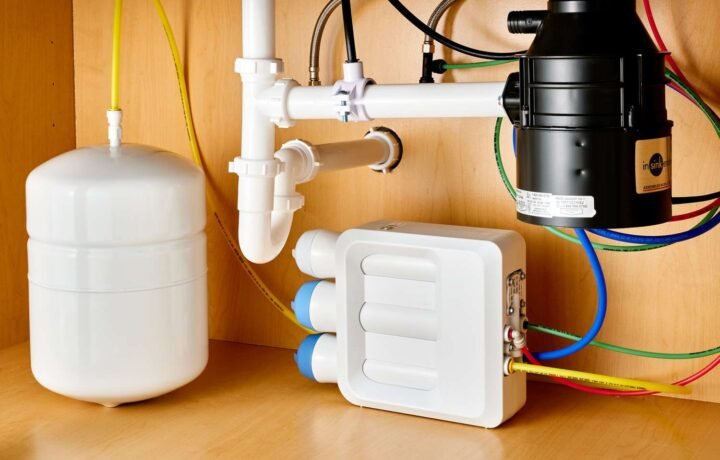
For example, someone who is generally happy with the water used for bathing may simply want better drinking water from the kitchen faucet. Installing a targeted system can sometimes be more practical than treating every gallon of water that enters the home.
Neither option is automatically better.
It depends on what you’re trying to solve.
Think about it this way: you wouldn’t install a new roof because one light bulb stopped working. The solution should match the problem.
Related analysis: The Little Signs Your Home’s Water Might Be Trying to Tell You Something
A good evaluation can help determine whether the issue is widespread or limited to a particular use.
Understanding the Goal of Contaminant Reduction
The word “contaminant” can sound alarming, but water treatment decisions should always be based on reliable information rather than fear.
Different filtration technologies are designed to address different substances, and no single system removes everything under every possible condition. Performance can depend on the specific equipment, water source, maintenance, and the characteristics of the water itself.
That’s why contaminant reduction should be approached as a targeted goal rather than a vague marketing promise.
If testing identifies a particular concern, homeowners can explore treatment options designed and certified, where applicable, for that type of reduction. It’s important to understand what a system is actually intended to address instead of assuming that “advanced” automatically means “handles everything.”
A good provider should be able to explain this clearly.
What is the concern? What does the testing show? What technology is being recommended, and why?
Those questions deserve straightforward answers.
Better Water Starts With Knowing What You Need
The internet can make water treatment seem more complicated than it really is.
Search for “best water filter,” and suddenly you have twenty browser tabs open. One website recommends carbon filtration. Another insists reverse osmosis is essential. A video claims you need a whole-home system, while the comments section confidently disagrees with everyone.
It’s enough to make you want to close the laptop and drink whatever comes out of the tap.
Instead, start with your own situation.
Do you dislike the taste? Are you noticing particles or sediment? Is there an odor? Does the concern affect every faucet or only one? Has something changed recently?
These observations can help narrow the possibilities.
The right system should solve a real problem, not create a new hobby involving replacement filters, complicated maintenance schedules, and mysterious buttons you’re afraid to touch.
Don’t Forget the Maintenance Side
Filtration systems need care. That’s simply part of the deal.
Depending on the equipment, filters or other components may require replacement or service at regular intervals. Ignoring maintenance can affect performance and may reduce the benefits you originally expected.
Before choosing a system, it’s worth asking a few practical questions.
How often does the filter need to be changed? Are replacement components easy to obtain? Can the homeowner handle routine maintenance, or is professional service recommended? What happens if the household uses more water than expected?
These details may not be exciting, but they matter long after installation day.
A filtration system should fit naturally into your lifestyle. If the maintenance requirements are completely unrealistic for your household, even an excellent system can become frustrating.
The best setup is often one you can actually live with.
Your Household Habits Matter More Than You Think
A family with four children may use water very differently from a couple living in a small home.
Morning showers, laundry, dishwashing, cooking, guests, pets, and work-from-home routines can all influence water consumption. A system that works perfectly for one household may not provide the same experience for another.
Available installation space matters too.
Some homes have a large basement or utility room where equipment can be installed comfortably. Others have very limited space and may need a more compact approach.
That’s why recommendations should consider the entire household, not just the product brochure.
A good water treatment decision is personal in a practical sense. It should reflect how you actually live.
The Best System Is the One That Solves the Right Problem
When people first start researching water filtration, they sometimes assume more equipment means better results.
More stages. More filters. More technology.
But unnecessary complexity isn’t always helpful.
A simple system that addresses the specific issue may be a better choice than an oversized setup filled with features you don’t need. On the other hand, a small basic filter may not be enough if the concern requires a more comprehensive treatment approach.
The goal is balance.
Understand the water. Identify what you want to improve. Consider how much water your household uses and where treatment will provide the most benefit.
Then choose accordingly.
A Better Water Experience Doesn’t Have to Be Complicated
At the end of the day, most people don’t research filtration systems because they enjoy comparing cartridges, tanks, and flow rates.
They want water that tastes better. They want fewer unpleasant odors. They may want cleaner-looking water, less sediment, or more confidence that the treatment system they choose is addressing a genuine concern.
Those goals are straightforward.
The path to achieving them should be straightforward too.
Start with information rather than assumptions. Avoid choosing a system simply because it worked for a neighbor or appeared at the top of an online search. Ask questions about performance, maintenance, and what the equipment is specifically designed to do.
The right water filtration solution should quietly support everyday life.
You shouldn’t have to think about it every time you pour a glass, make coffee, or turn on the shower. Ideally, the system does its job in the background while you get on with yours.
And really, when it comes to something as basic and essential as water, that kind of simple reliability is often exactly what homeowners are looking for.