Key Takeaways
- Start with the shopper’s daily needs, routines, budget, and preferred meal occasions.
- Build a focused menu with familiar favorites, useful variety, and options that match local demand.
- Use clear displays, labels, pricing, and product groupings to make meal selection faster and easier.
- Make food safety part of daily operations through written procedures, training, temperature checks, and documentation.
- Choose packaging that protects food quality, supports portability, and provides clear reheating and allergen information.
- Price meals with food costs, labor, packaging, waste, and customer value in mind.
- Use sales patterns and production planning to reduce overproduction, markdowns, and food waste.
- Train employees on food handling, product rotation, cleaning, customer questions, and display standards.
- Track sales, margins, waste, and customer feedback to identify which products and strategies need adjustment.
- Review the program regularly so menus, equipment, staffing, and merchandising can adapt to changing customer demand.
Grab-and-go meals can offer grocery shoppers a practical middle ground between cooking from scratch and ordering delivery from a restaurant. A strong program helps people solve a specific daily problem, whether that is lunch between meetings, dinner after a commute, or a simple meal for one. Success depends on making the choice easy, the food appealing, and the service dependable from the first display to the final bite. That starts with an operation designed for the food being sold. Atlantic Food Bars, a Dallas, Texas-based manufacturer with more than 75 years of experience serving food retailers, offers hot food display equipment, including packaged hot-food cases and merchandising configurations for self-service, full-service, and combination layouts. The right case can support product visibility, organized replenishment, and a more convenient path for customers selecting ready-to-eat meals.
Start With the Shopper’s Daily Routine
Prepared-food plans should begin with when, why, and how customers shop. Office workers may need a portable lunch that is quick to pick up. Parents may want a dinner solution that feeds several people without requiring much preparation. Students, commuters, and solo households may favor single servings, while older shoppers may appreciate clearly labeled meals that are easy to reheat. Review sales by hour, basket size, location, and day of the week. Pair that information with cashier comments, customer feedback, and observations near the deli or front entrance. A store that sells bowls steadily at noon may need a different production schedule than one where rotisserie chicken and family sides peak late in the afternoon.
Build a Menu That Feels Fresh and Familiar
A focused menu generally gives teams a better chance to maintain quality than an oversized selection with inconsistent availability. Start with dependable favorites, then add a limited rotation to create interest. Rotisserie chicken, sandwiches, wraps, soups, pasta dishes, rice bowls, and comfort-food entrées can all have a role when they fit the store’s customer base. Offer choices at several value levels. A basic soup-and-sandwich lunch, an everyday dinner entrée, and a higher-priced seasonal specialty can serve different budgets without making the case feel cluttered. Include vegetarian, high-protein, and lower-sodium options where demand supports them, but ensure each item earns its place through steady sales or a clear strategic purpose.
Plan Displays for Speed and Visibility
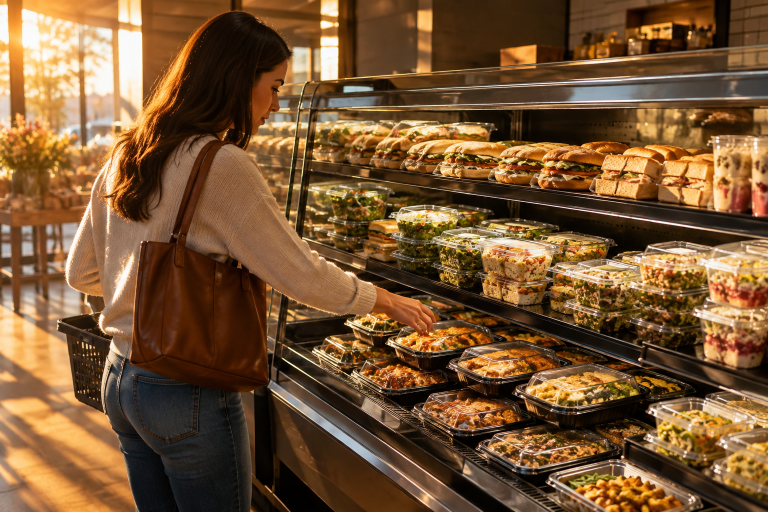
Customers in busy grocery aisles rarely want to search for a meal. Put proven sellers in highly visible locations, keep sightlines clean, and make the shopping sequence obvious. Group items by the problem they solve, such as “Lunch Under 10 Minutes,” “Dinner for Two,” or “Take-Home Sides.” Every package and shelf tag should plainly state the product name, price, serving size, reheating directions, and major allergen information. Clear labels reduce hesitation, help customers compare options, and make it easier for staff to answer questions consistently. Self-service works well for sealed products that customers can select quickly, while staff service may be a better fit for carved meats, custom portions, or foods that need more handling.
Make Food Safety Part of the Workflow
Food safety is not a single check at the beginning of a shift. It relies on trained personnel, properly functioning equipment, documented routines, and prompt corrective action when something is out of standard. Managers should establish written procedures for opening, restocking, temperature checks, cleaning, and closing that employees can follow every day. The FDA Food Code provides a model for retail food safety practices involving hot holding, cooling, sanitation, and date marking. Stores must also follow the requirements enforced by their state and local health authorities. Temperature checks should occur at scheduled intervals throughout the day, with records documenting what was checked and what action was taken if needed.
Related analysis: Eating Better Without Trying Too Hard: Why Functional Foods Are Finding a Place on Our Plates
Choose Packaging That Protects Quality
Packaging affects portability, presentation, heat retention, and customer confidence. Choose containers that are sturdy enough for the item, easy to carry, simple to open, and suitable for the stated reheating method. Right-sized packaging can also prevent a meal from looking underfilled or from shifting during transport. Labels should identify ingredients, allergens, serving size or net weight, use-by or sell-by guidance, and reheating instructions. When evaluating recyclable or reduced-material packaging, consider the full tradeoff between product protection, appearance, cost, and the local recycling options available to customers.
Price for Value Without Losing Margin
Shoppers may compare a prepared grocery meal with restaurant takeout, delivery, leftovers, or home cooking. Pricing should communicate value while accounting for food cost, labor, packaging, shrinkage, and markdowns. Simple value, standard, and premium tiers can make the assortment easier to understand. Bundles can increase convenience and perceived value. For example, pair a main dish with a side, beverage, or dessert when the combination makes sense. Before changing prices across an entire chain, test the adjustment in a small group of stores and compare unit sales, gross margin, and markdown activity.
Reduce Waste With Better Production Planning
Overproduction can weaken profitability and leave employees managing unnecessary end-of-day product. Use hourly sales patterns to plan smaller, more frequent production runs, especially for foods with short display windows, track which products sell through, which need markdowns, and which repeatedly remain unsold. Menus can also share ingredients intelligently. A roasted vegetable component, for example, may work in a bowl, a side dish, and a sandwich, while still creating distinct meals. Establish clear rules for rotation, markdowns, donations (where permitted), disposal, and end-of-day handling so that every employee knows what to do.
Train Staff to Protect the Experience
Employees need practical training beyond food preparation. They should know how to complete temperature checks, respond to spills, rotate products, clean equipment, answer basic allergen questions, and direct customers to the correct label or manager when more information is needed. Short coaching sessions during regular shifts can reinforce expectations without pulling the team away from service for long periods. Assign ownership for display appearance and product rotation so that a polished, well-stocked case remains a shared standard rather than an occasional project.
Measure Results and Improve in Small Steps
Review unit sales, sales by hour, gross margin, waste, markdowns, and repeat purchasing patterns. Compare results by store, daypart, promotion, weather conditions, and product type. A new bowl, bundle, or display position should be tested and measured before becoming a broad rollout. A 30-day review can help determine whether a new item deserves another production cycle, a recipe adjustment, or removal. A quarterly program review gives leaders time to assess the broader menu, equipment needs, labor routines, and customer feedback.
Related analysis: Meat Without the Farm: A Quiet Revolution on Our Plates
Common Questions
How many meals should a store offer at first?
Begin with a manageable assortment that the team can consistently produce, hold, label, and replenish. Expand only after sales data shows clear demand.
What information belongs on a prepared-meal label?
Include the product name, price, serving information, ingredients, allergen details, date guidance, and reheating instructions.
What should managers review before buying display equipment?
Consider the menu, expected traffic, available space, service style, visibility, cleaning access, restocking needs, temperature performance, and future flexibility.
Conclusion
A better grab-and-go program is built through connected decisions, not attractive food alone. Stores need to consider what shoppers actually want, how often they purchase prepared meals, and which menu items fit the store’s equipment and daily workflow. Focused menus, safe handling procedures, clear merchandising, useful packaging, disciplined production, and trained staff all contribute to a more consistent customer experience. Regularly reviewing sales, customer feedback, waste, and product performance can also help stores adjust their offerings as demand changes. When these elements work together, employees can serve customers more efficiently while maintaining consistent food quality and presentation. For Texas retailers and foodservice operators, a well-planned grab-and-go program can become a practical part of their daily operations, encourage repeat visits, and build customer trust over time.