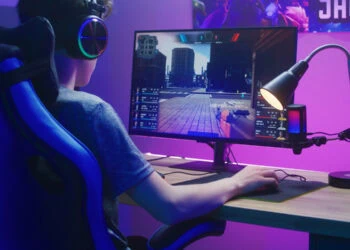
There was a time when game characters felt… predictable. You’d walk into a room, and enemies would follow the same pattern—attack, pause, repeat. Friendly NPCs would stand in one place, repeating the same line like a broken record. It worked, back then. We didn’t question it much.
But something has changed over the years. Slowly, almost quietly, game worlds have started to feel more alive. Not just bigger or prettier—but smarter.
And if you’ve played any recent title, you’ve probably felt it too. That strange moment when an in-game character reacts in a way you didn’t expect. Not scripted exactly… just a bit more human.
The Early Days of “Smart” Characters
Let’s be honest—early AI in games wasn’t really intelligent. It was rule-based. Developers would program specific behaviors: if the player does this, the NPC responds with that.
It created the illusion of intelligence, but once you played long enough, patterns emerged. You could predict enemy movement, exploit weaknesses, even manipulate outcomes.
Related analysis: When Gaming Starts Paying Back: Fun, Hype, or Something More?
Fun? Yes. Realistic? Not quite.
Still, those systems laid the groundwork. They showed what was possible, even if it was limited.
The Shift Toward Adaptive Behavior
Modern games are moving beyond fixed patterns.
Now, NPCs can adapt. They learn from player actions, adjust their strategies, and sometimes even surprise you. It’s not perfect, but it’s noticeably different.
Enemies might flank you instead of charging head-on. Teammates might react differently based on your decisions. Some characters remember past interactions, subtly changing how they respond later.
Related analysis: Playing Anywhere or Playing Better? Rethinking How We Experience Games Today
It’s less about following rules and more about responding to situations.
AI in Game Development: NPCs kitne smart ho gaye hain
If you look closely, the biggest leap isn’t just technical—it’s experiential.
NPCs are no longer just background fillers. They’re becoming part of the storytelling itself. Their behavior adds depth, unpredictability, and sometimes even emotional weight to the game.
In open-world environments, this becomes even more noticeable. Characters go about their routines, react to changes in the environment, and interact with each other in ways that feel… organic.
It’s not true intelligence, of course. But it’s convincing enough to blur the line.
Related analysis: Matka 420 and Tara Matka: Understanding Online Matka Terminology
And that’s what matters.
When AI Enhances Immersion
Good AI doesn’t scream for attention. It blends in.
You don’t stop and think, “Wow, that was advanced programming.” Instead, you feel immersed. The world reacts to you, not just around you.
Take stealth games, for example. Guards now communicate, search intelligently, and adapt if they notice something off. It creates tension—not because the game is harder, but because it feels more real.
Or consider role-playing games. Dialogue systems are becoming more dynamic. Choices matter more, not just in outcomes but in how characters perceive you.
Related analysis: Matka 420 and Tara Matka: Understanding Online Matka Terminology
It’s subtle, but it changes everything.
The Balance Between Smart and Fun
Here’s an interesting challenge—making AI smarter doesn’t always make a game better.
If enemies become too intelligent, it can feel frustrating. Imagine a game where NPCs always outthink you. That might be realistic, but not very enjoyable.
Game developers walk a fine line. AI needs to be believable, but also fair. Challenging, but not overwhelming.
Sometimes, a slightly “dumb” decision by an NPC is intentional—designed to keep the experience fun.
Related analysis: Golden Matka and Fix Matka: Understanding Online Matka Terms
And honestly, that balance is harder to achieve than it sounds.
Beyond Combat: Emotional and Social AI
This is where things get really interesting.
AI in games isn’t just about combat anymore. It’s moving into emotional and social spaces. Characters react to tone, remember your choices, and build relationships over time.
You might notice a companion becoming more trusting, or distant, depending on how you interact with them. It’s not just gameplay—it’s storytelling driven by behavior.
Some games are even experimenting with AI-generated dialogue, making conversations feel less scripted and more fluid.
It’s early days, but the potential is… exciting.
The Road Ahead
We’re still far from truly intelligent NPCs. Most systems are sophisticated, yes—but they’re still built on structured frameworks.
However, with advancements in machine learning and real-time processing, the gap is closing. Future games might feature characters that learn continuously, adapt uniquely to each player, and create experiences that no two players share in exactly the same way.
That’s a big shift—from designed experiences to evolving ones.
Final Thoughts
AI in game development isn’t about replacing human creativity. It’s about enhancing it.
Smarter NPCs don’t just make games more complex—they make them more engaging, more unpredictable, more alive.
And maybe that’s why this evolution feels so significant.
Because for the first time, it’s not just us playing the game.
It sometimes feels like the game is… responding back.